
Sanja Matsuri

MATSURI

Sanja Matsuri

About a hundred portable shrines, three heavy ones from the shrine itself, and a whole old town out on the street.

In short: Sanja Matsuri 2027 in Asakusa (May 14–16): the official schedule, the 7:00 miyadashi, about 100 neighbourhood mikoshi, which day to go, where to watch and access.

DATES
May 14–16, 2027 (Fri–Sun)
MIKOSHI
About 100 from 44 neighbourhoods, plus 3 from the shrine
MIYADASHI
Sun May 16, 7:00
ENTRY
Free
ABOUT

Sanja Matsuri is the annual festival of Asakusa Shrine, the small shrine that stands right next to the main hall of Senso-ji. "Sanja" means three shrines: it honours the three men in the founding story of Senso-ji, the fisherman brothers Hinokuma Hamanari and Takenari, who pulled a statue of Kannon out of the river in 628, and Hajino Nakatomo, the local leader who enshrined it. People in Asakusa still call the shrine "Sanja-sama".

The festival is held on the Friday, Saturday and Sunday around the third Saturday of May. In 2027 that is May 14 to 16, according to the schedule Asakusa Shrine has already posted. The shrine says about 1.8 million people come over the three days. Friday is the parade, Saturday is the day of about 100 neighbourhood mikoshi, and Sunday belongs to the shrine's own three mikoshi, from the 7:00 start until they return after dark.

TokyoMikoshiAsakusaThree daysFree to watch
MOVIE

Sanja Matsuri: the miyadashi, the high point of the festivalYouTube / Nippon TV News (NTV)

Sanja Matsuri 2026: the Sannomiya mikoshi on Yanagi-dori (4K)YouTube / Matsuri Japan

Asakusa Sanja Matsuri: shrine procession crowds in Tokyo (4K)YouTube / JAPAN IN 4K

HIGHLIGHTS
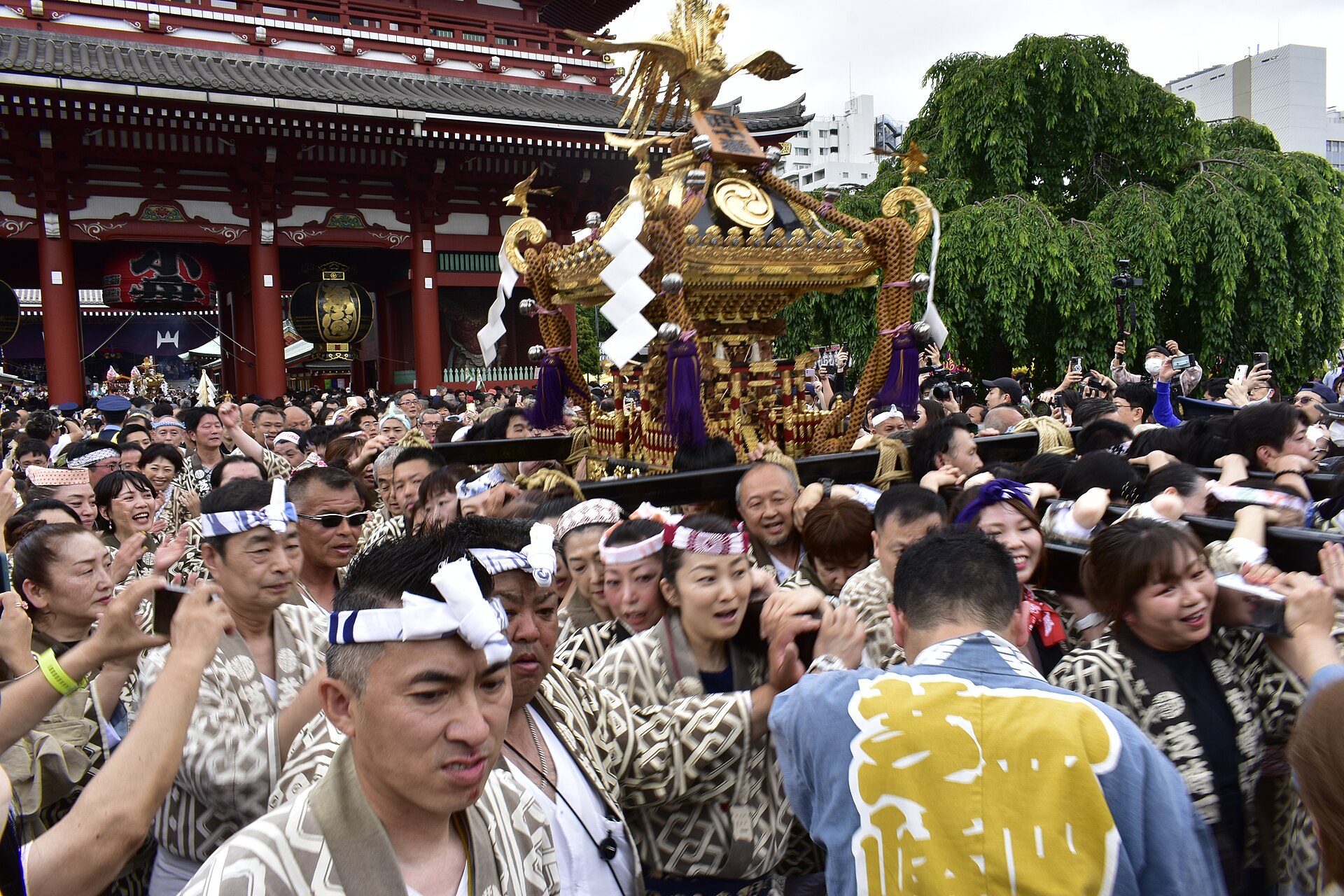
Neighbourhood mikoshi carried in front of Senso-ji, 2023

01

MIYADASHI

The three main mikoshi leave the shrine

At 7:00 on Sunday, the shrine's own three mikoshi, Ichinomiya, Ninomiya and Sannomiya, are carried out of the shrine grounds. This is the moment the whole festival builds up to.

More about The three main mikoshi leave the shrine

Each mikoshi then heads to a different part of the parish and is passed from neighbourhood to neighbourhood all day. In 2026 the Ichinomiya went west, the Ninomiya south and the Sannomiya east. The 2027 routes have not been published yet.

The mikoshi are not old. The shrine had seven before the war, and all of them were lost in the air raids. The Ichinomiya and Ninomiya were made in 1950 and the Sannomiya in 1953.

Miyadashi
Sun May 16, 7:00
Miyairi (return)
About 19:00–20:00
Where
Asakusa Shrine grounds, then the parish streets
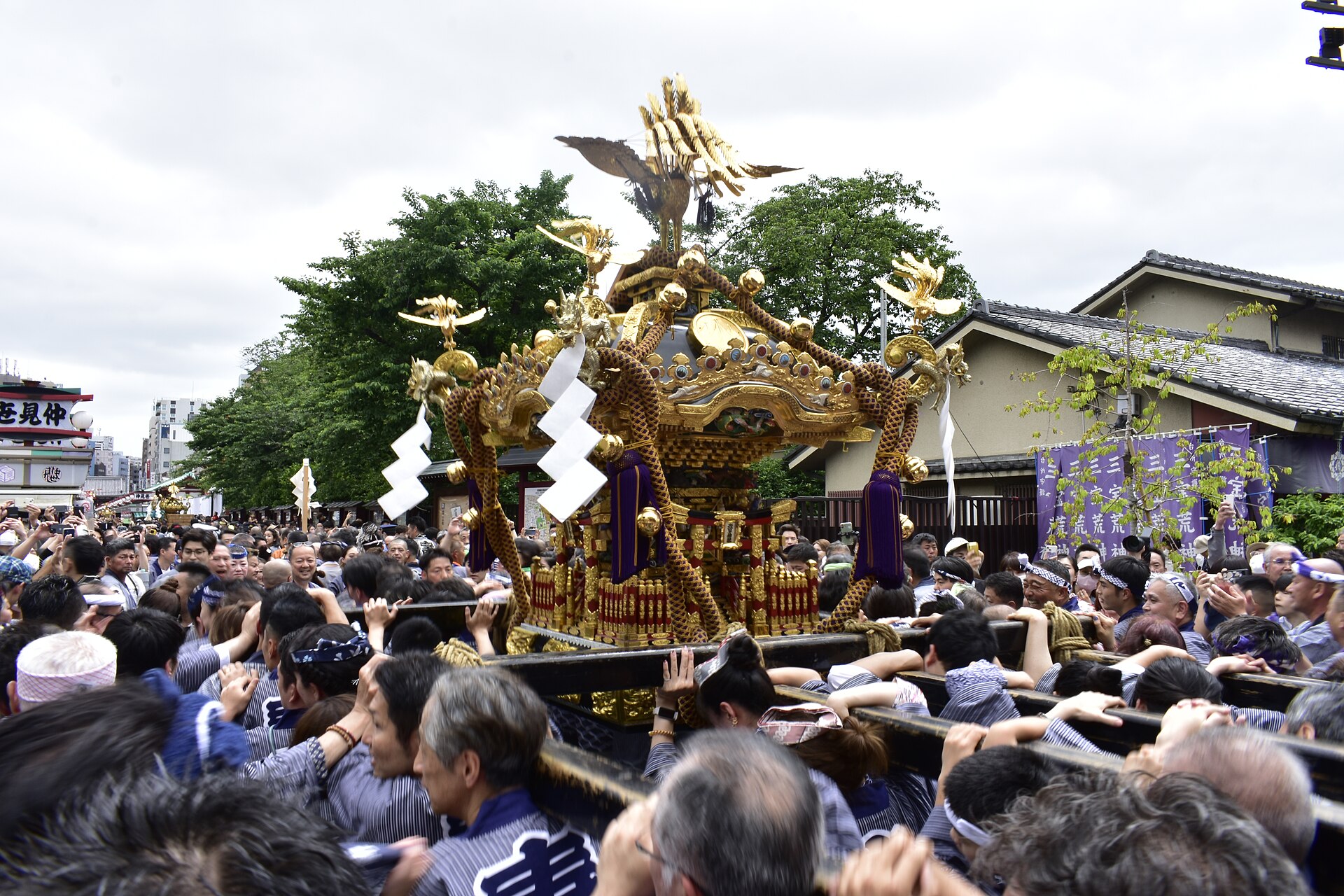
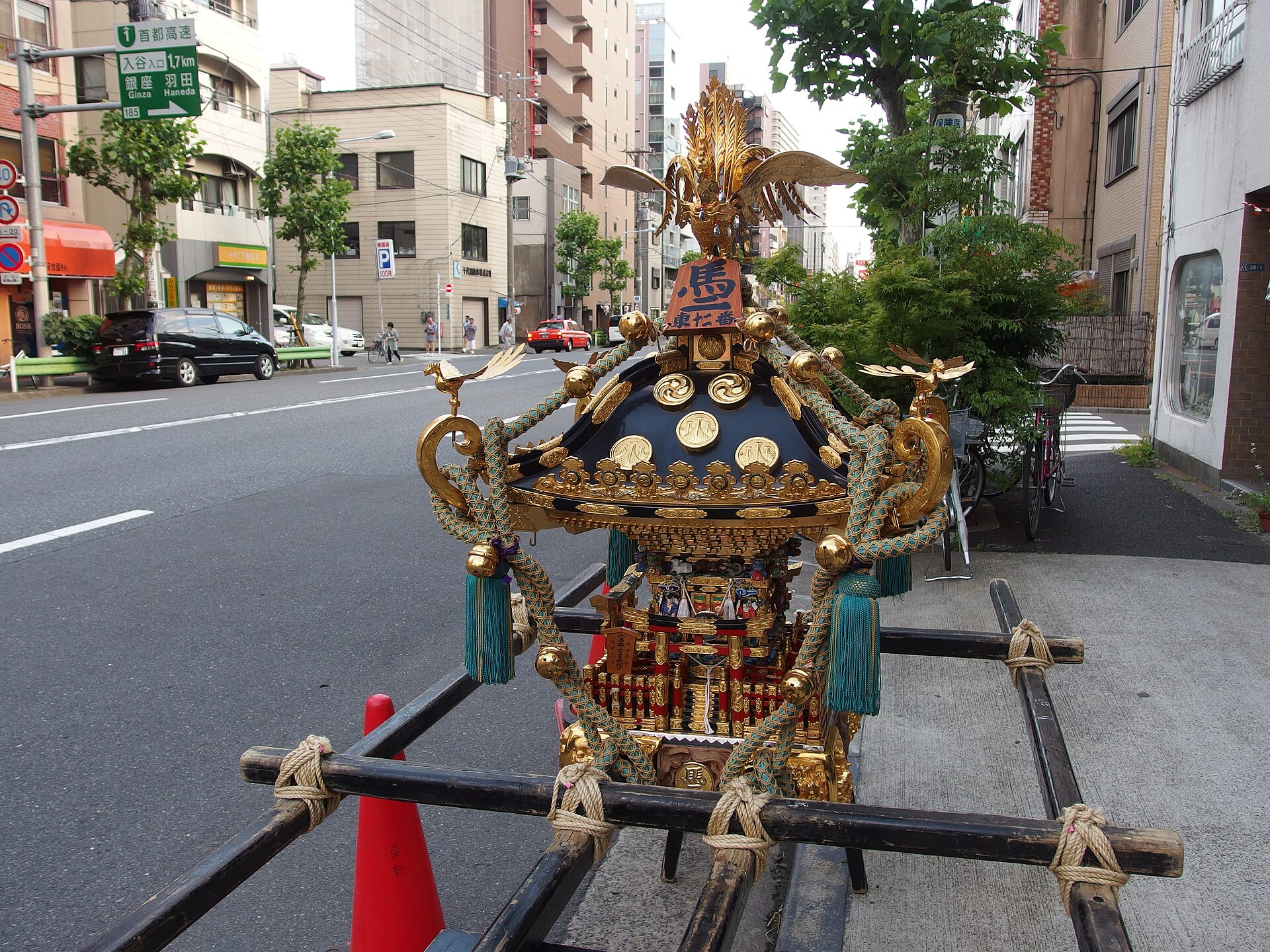
A neighbourhood mikoshi in the crowd in Asakusa, 2023

02

RENGO TOGYO

About 100 neighbourhood mikoshi

On Saturday from noon, about 100 mikoshi from the 44 neighbourhoods of the parish gather in the open space behind Senso-ji's main hall and set off one at a time.

More about About 100 neighbourhood mikoshi

Each one is carried to Asakusa Shrine to be purified, then back out into its own neighbourhood. With so many in a small area, this is the day you are most likely to see a mikoshi wherever you walk in Asakusa. At 15:30 the children's mikoshi, the Ne-no-miya, goes out too.

When
Sat May 15, from 12:00
Where
Behind the main hall of Senso-ji, then each neighbourhood
Children's mikoshi
15:30
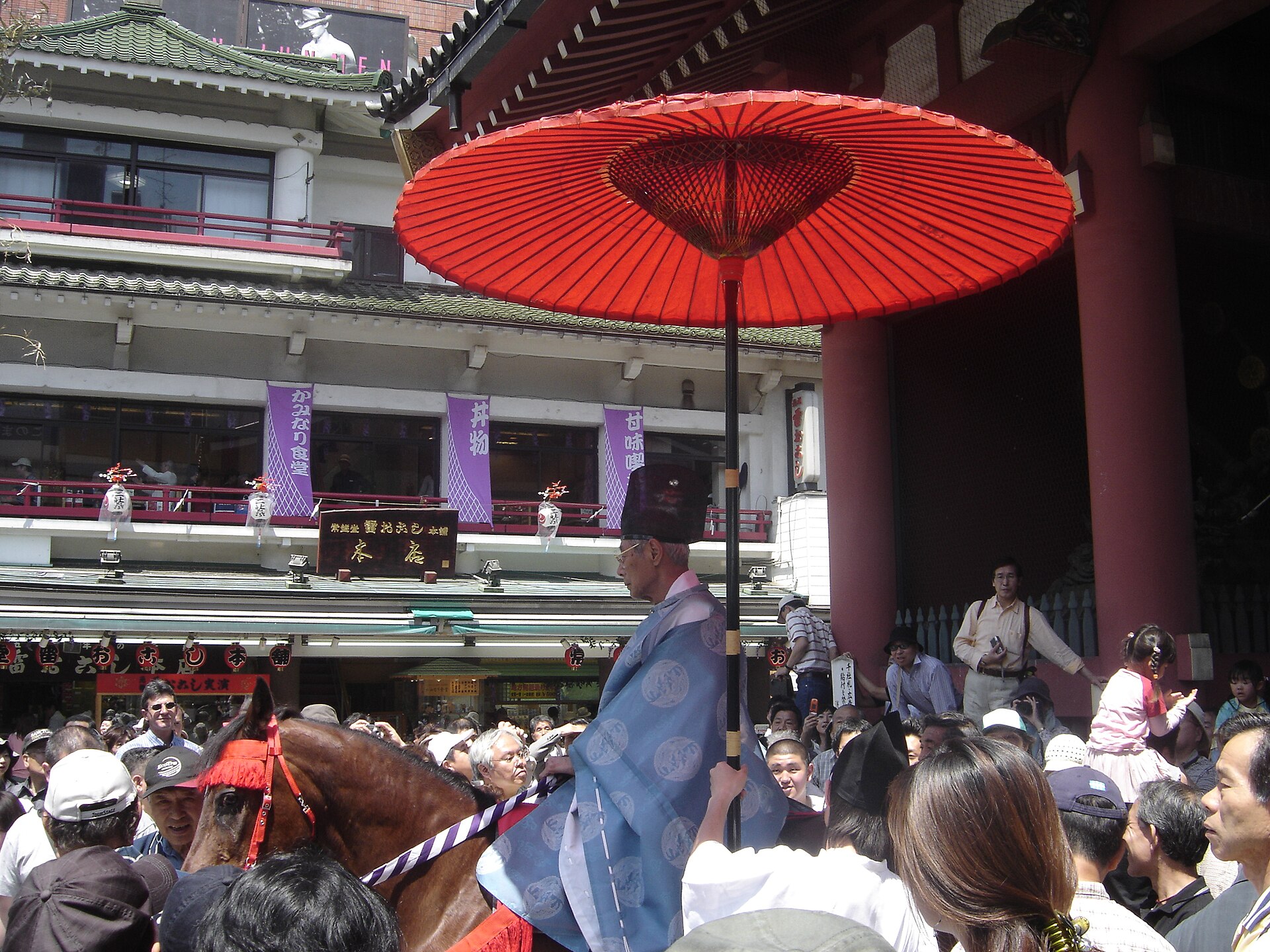
A Shinto priest on horseback in the parade at Kaminarimon, 2006

03

DAIGYORETSU

The grand parade

On Friday at 13:00 the festival opens with a parade of music floats, the chanting of tobi fire-brigade leaders, and the shrine's dances, walking through Kaminarimon gate and up Nakamise to the shrine.

More about The grand parade

The route goes Yanagi-dori, Umamichi-dori and Kaminarimon-dori, then through Kaminarimon and along Nakamise to Asakusa Shrine. It includes the Shirasagi-no-mai, a dance of dancers dressed as white herons. The parade is cancelled in rain.

When
Fri May 14, 13:00
Route
Yanagi-dori, Umamichi-dori, Kaminarimon-dori, Kaminarimon, Nakamise
Rain
Cancelled
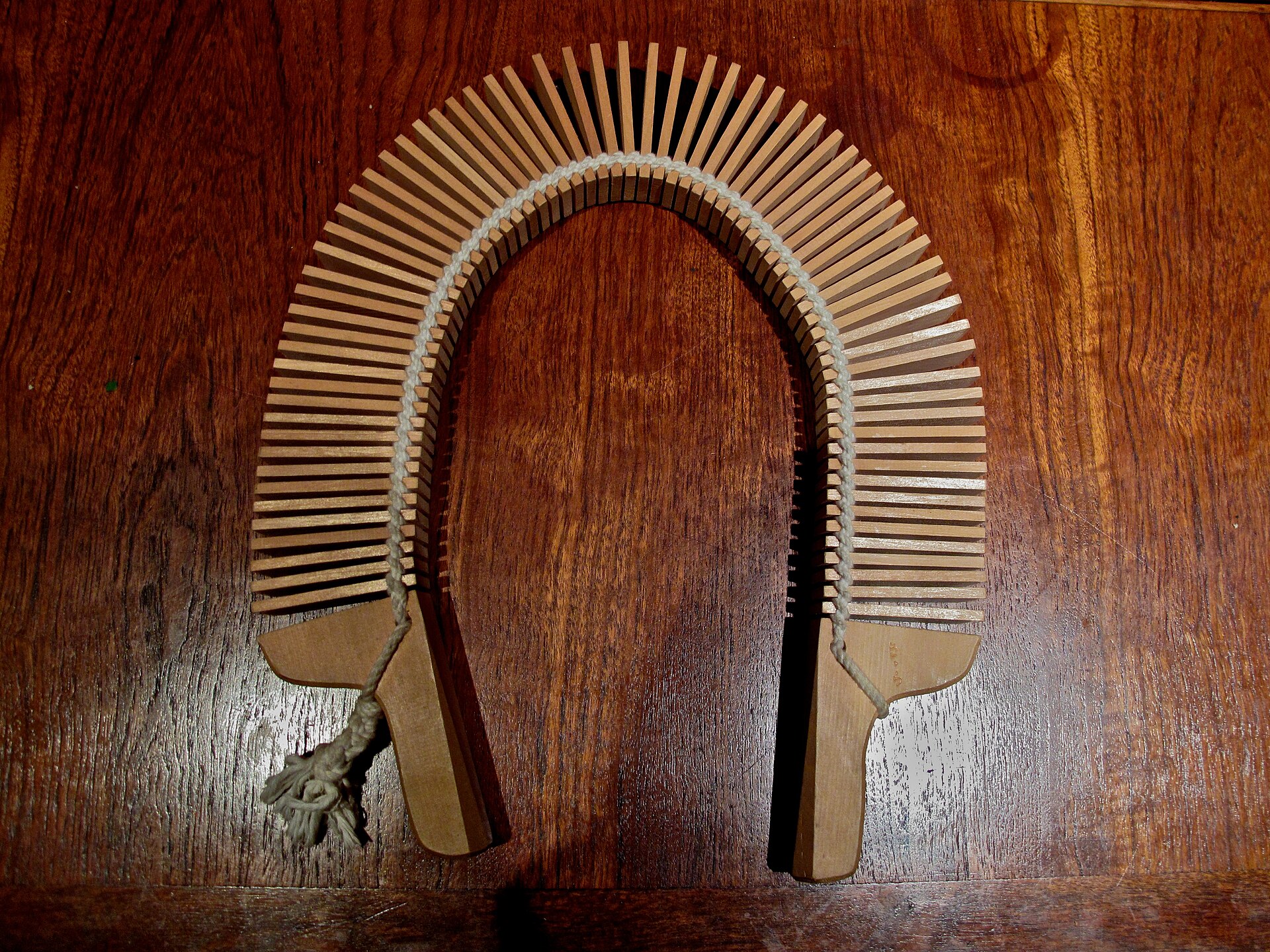
A binzasara, the wooden clapper used in the dance

04

BINZASARA

The binzasara dance

A dengaku field dance performed with binzasara, clappers made of strips of wood, and red and white paper. Tokyo lists it as an intangible cultural property.

More about The binzasara dance

It is danced in the parade and then twice on Friday afternoon at the shrine. It is short and quiet compared with the mikoshi, and much easier to see up close.

At the shrine hall
Fri May 14, 14:20
At the kagura stage
Fri May 14, 15:00 (cancelled in rain)
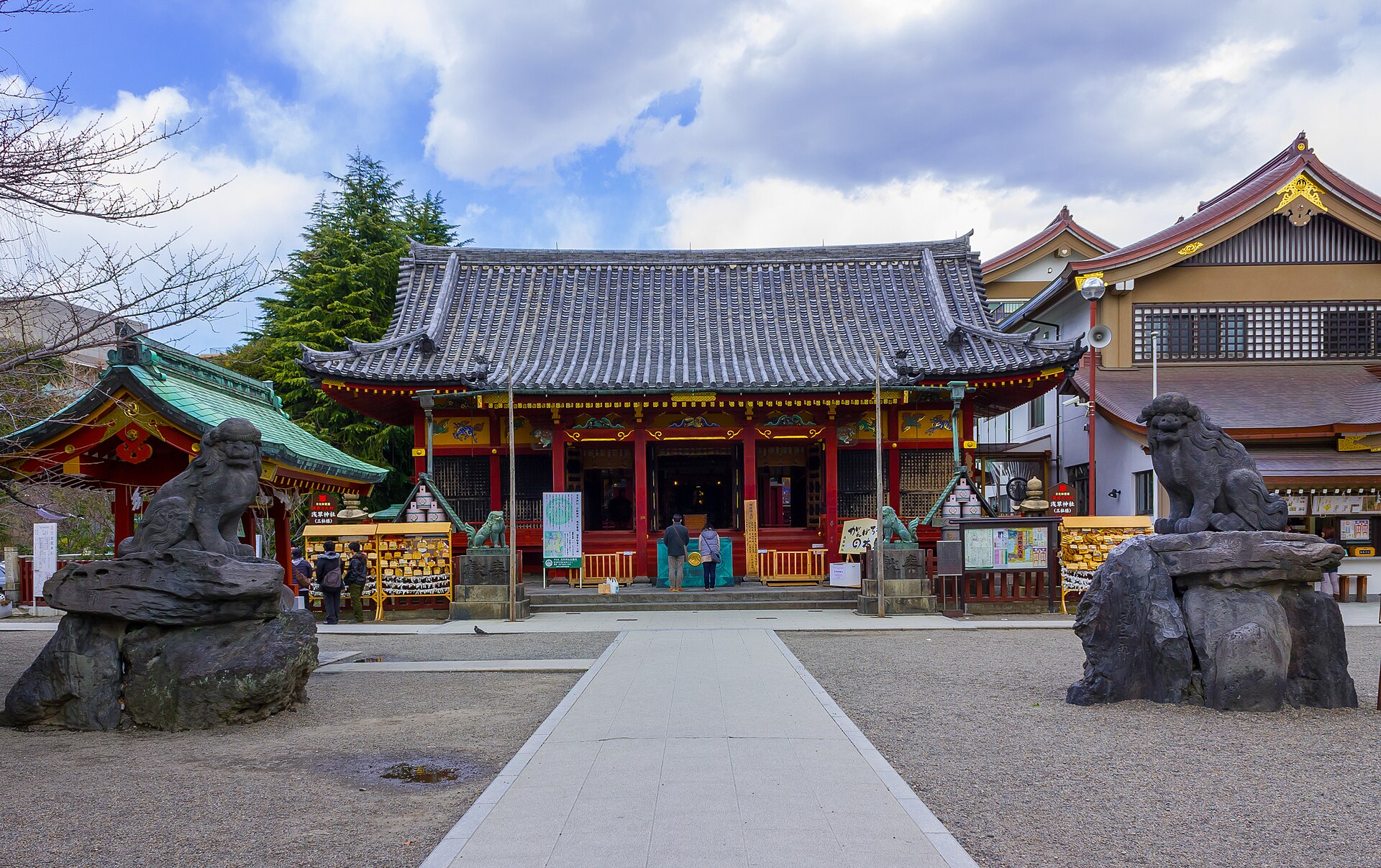
The hall of Asakusa Shrine

05

ALL YEAR

Asakusa Shrine and its mikoshi store

Not in Tokyo in May? The shrine is worth a stop on any visit to Senso-ji. Its hall was built in 1649, given by the third Tokugawa shogun, Iemitsu, and is a National Important Cultural Property.

More about Asakusa Shrine and its mikoshi store

The three main mikoshi are kept in a storehouse in the grounds. The shrine says its doors are opened during the festival, at New Year, and on weekends and holidays in early spring, so you can see them then.

Address
Asakusa 2-3-1, Taito-ku
Office hours
Weekdays 9:00–16:00, weekends and holidays 9:00–16:30
SCHEDULE
MAY 14Friday: the parade and the dances4 stops
  1. A Shinto priest on horseback in the parade at Kaminarimon, 2006

    13:00

    Daigyoretsu, the grand parade

    Music floats, the chanting of tobi fire-brigade leaders, the binzasara and heron dances, through Kaminarimon and up Nakamise to the shrine. Cancelled in rain.

    WHERE
    Yanagi-dori, Umamichi-dori, Kaminarimon-dori, Nakamise
    Open in Google Maps →
  2. A binzasara, the wooden clapper used in the dance

    14:20

    Binzasara dance

    Offered at the shrine hall.

    WHERE
    Asakusa Shrine
    Open in Google Maps →
  3. 15:00

    Binzasara dance on the kagura stage

    A second performance. Cancelled in rain.

    WHERE
    Asakusa Shrine kagura stage
  4. 15:30

    The spirit enters the neighbourhood mikoshi

    A rite moves the spirit of the shrine into the mikoshi of each neighbourhood, ready for the next day.

    WHERE
    Asakusa Shrine
MAY 15Saturday: about 100 neighbourhood mikoshi4 stops
  1. 10:00

    Festival ceremony

    The main rite of the annual festival.

    WHERE
    Asakusa Shrine
  2. A neighbourhood mikoshi in the crowd in Asakusa, 2023

    12:00

    Rengo togyo

    About 100 mikoshi from 44 neighbourhoods set off one by one from behind Senso-ji's main hall, are purified at the shrine, and go back to their own streets.

    WHERE
    Behind Senso-ji main hall
    Open in Google Maps →
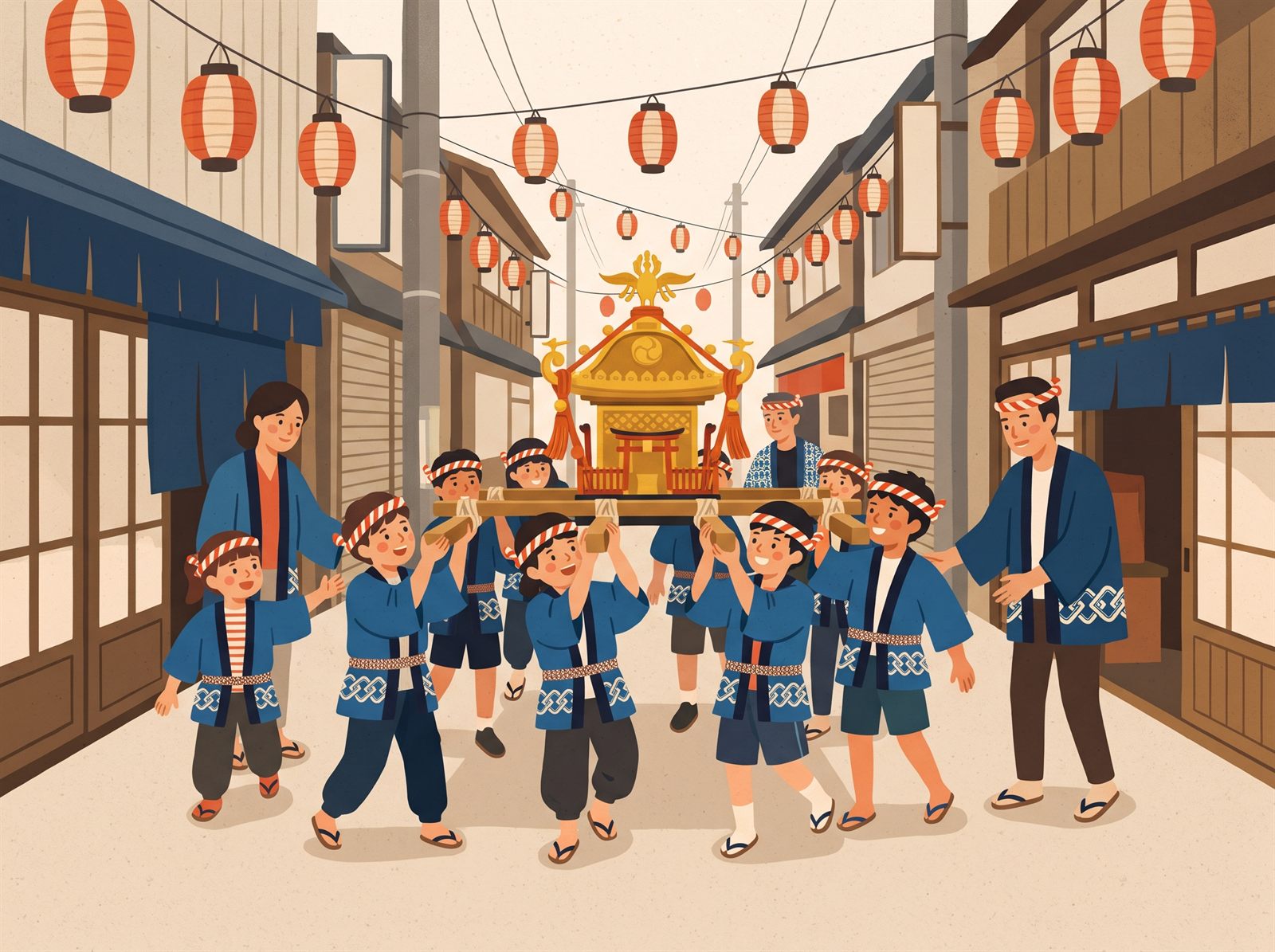
  3. AI-made illustration of children carrying a small mikoshi down a lantern-lit street, not a photo of Sanja MatsuriAI image

    15:30

    Children's mikoshi

    The Ne-no-miya, the children's mikoshi, goes out.

    WHERE
    Asakusa
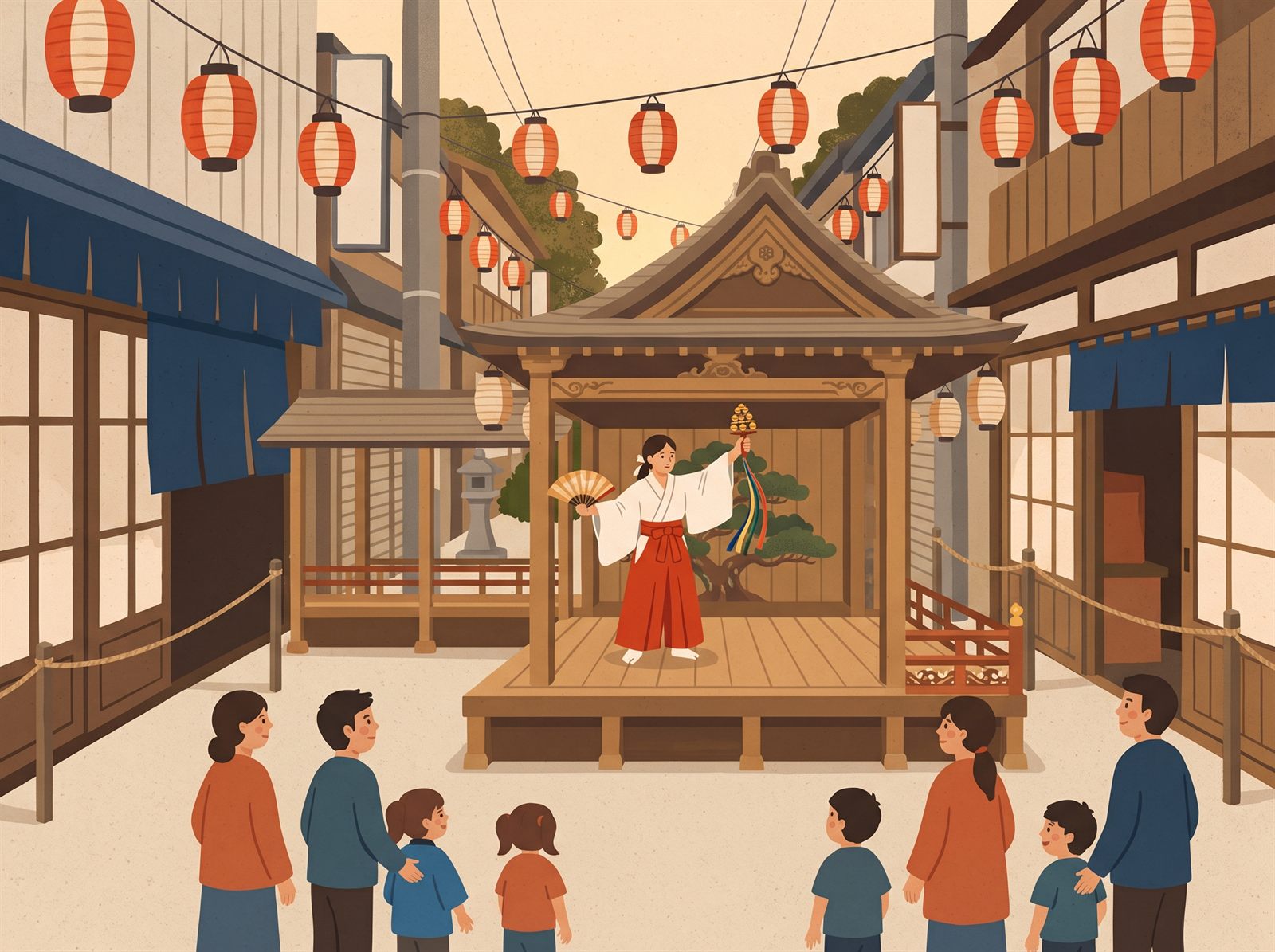
  4. AI-made illustration of a shrine maiden dancing on a kagura stage, not a photo of Asakusa ShrineAI image

    17:00

    Miko dance

    Shrine maidens dance on the kagura stage.

    WHERE
    Asakusa Shrine kagura stage
MAY 16Sunday: the three main mikoshi, from dawn to dark4 stops
  1. Neighbourhood mikoshi carried in front of Senso-ji, 2023

    7:00

    Miyadashi

    Ichinomiya, Ninomiya and Sannomiya are carried out of the shrine grounds.

    WHERE
    Asakusa Shrine grounds
    Open in Google Maps →
  2. AFTER

    Through the neighbourhoods

    Each mikoshi tours one part of the parish all day. Routes for 2027 are not out yet. Kaminarimon-dori is closed to traffic 10:00–19:00 and Umamichi-dori 10:00–17:00.

    WHERE
    West, south and east Asakusa (2026)
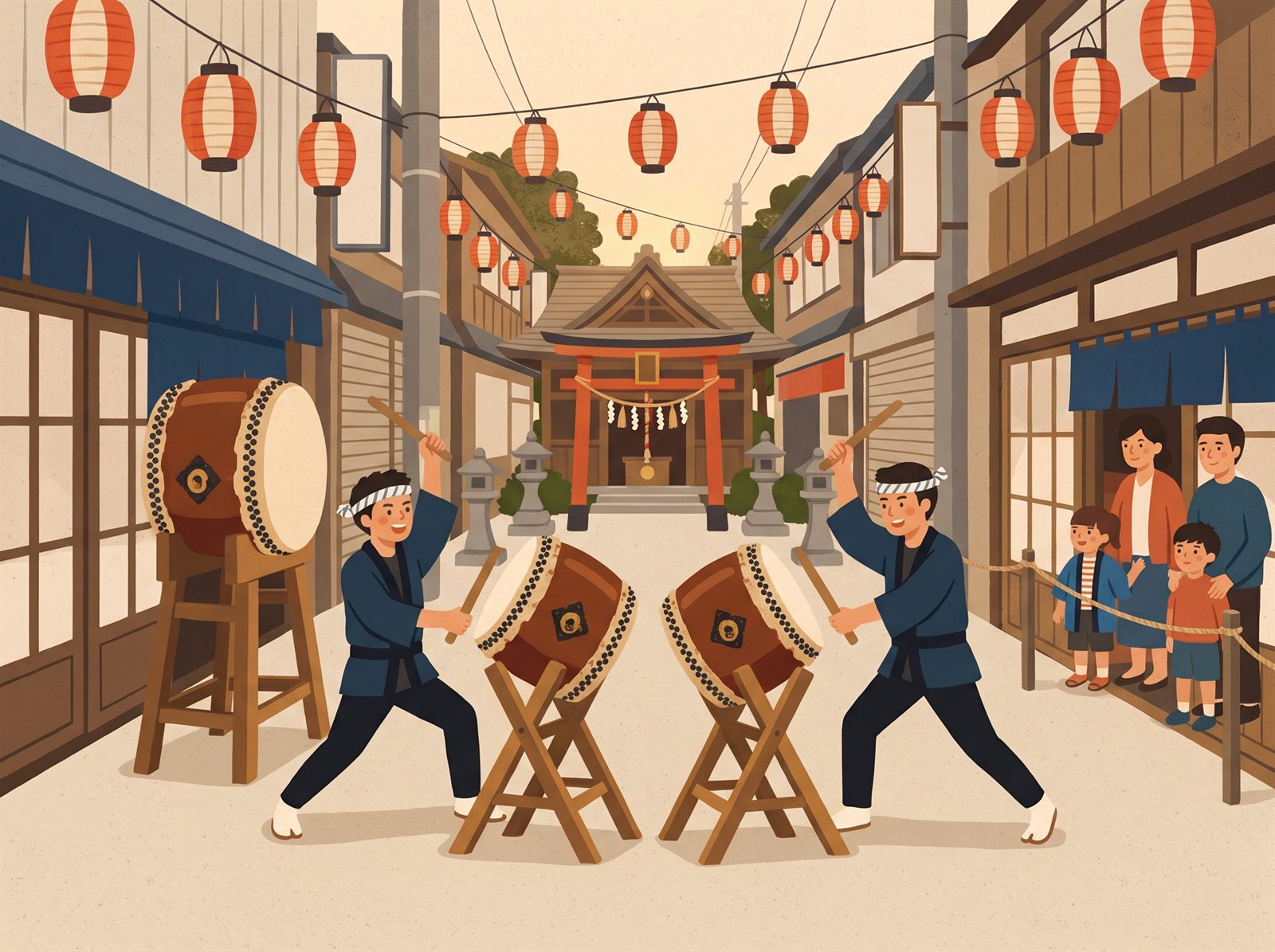
  3. AI-made illustration of two taiko drummers near a shrine, not a photo of Sanja MatsuriAI image

    16:00

    Taiko drumming

    Japanese drums in the shrine grounds, before the mikoshi come back.

    WHERE
    Asakusa Shrine grounds
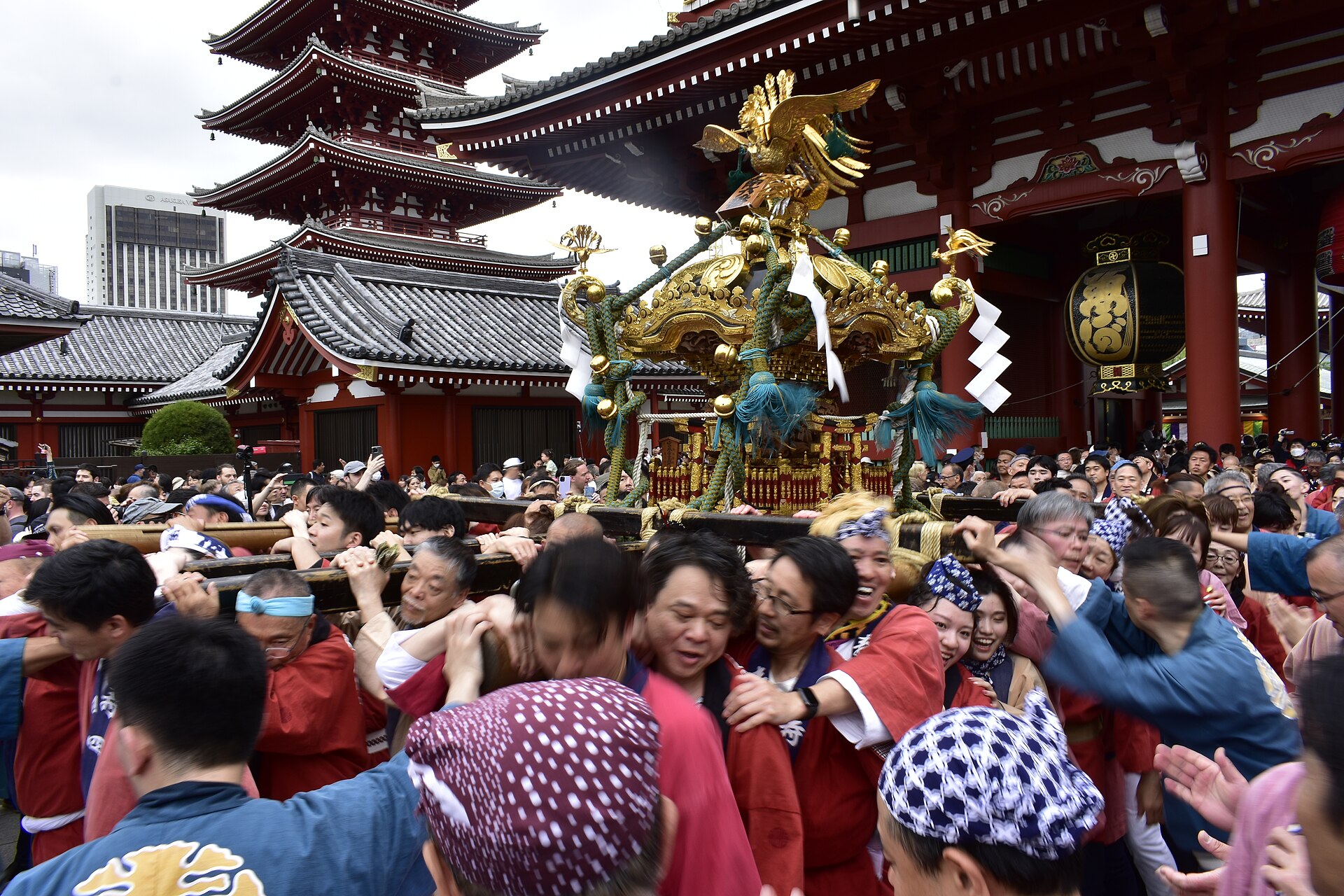
  4. A mikoshi carried in front of Senso-ji, 2023

    19:00

    Miyairi

    The three mikoshi return to the shrine, usually by about 20:00, and the spirit is taken back to the main hall.

    WHERE
    Asakusa Shrine

Times are from the 2027 schedule on the Asakusa Shrine website, which says it may still change. There is also a rite on Thursday, May 13 at 19:00, when the spirit is moved into the three main mikoshi. The parade and the kagura-stage binzasara are cancelled in rain. Check the shrine site again in May for the routes.

SANJA MATSURI FOOD TOPIC

「Eat in Asakusa」!!

Asakusa is one of the best areas in Tokyo for old-style food, and during the festival the side streets are full of stalls. Restaurants near the shrine get very busy, so eat a little early.

01

Ningyo-yaki

\ Nakamise snack /

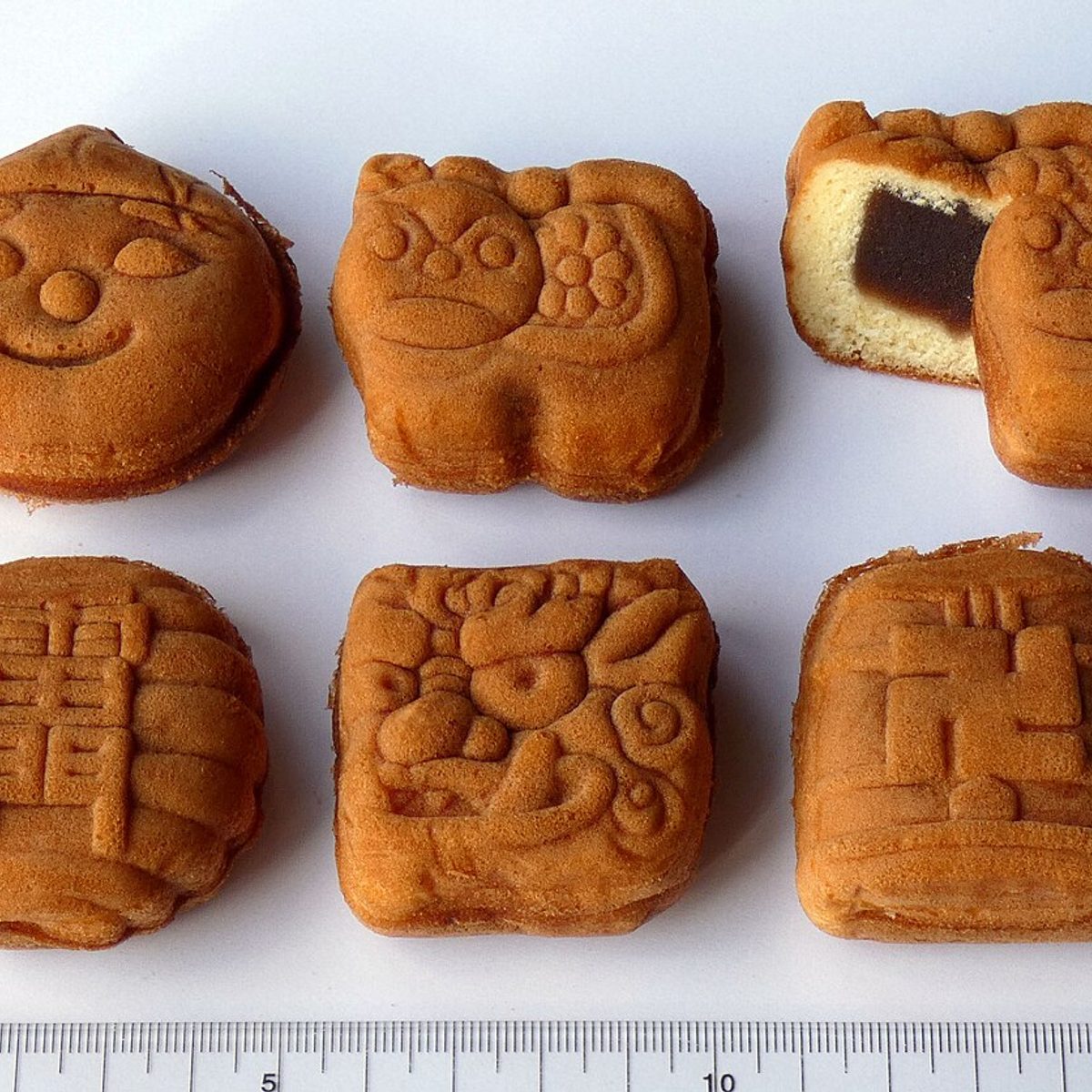
Ningyo-yaki

Small sponge cakes filled with sweet bean paste, baked in moulds. Several shops on and around Nakamise make them in front of you.

02

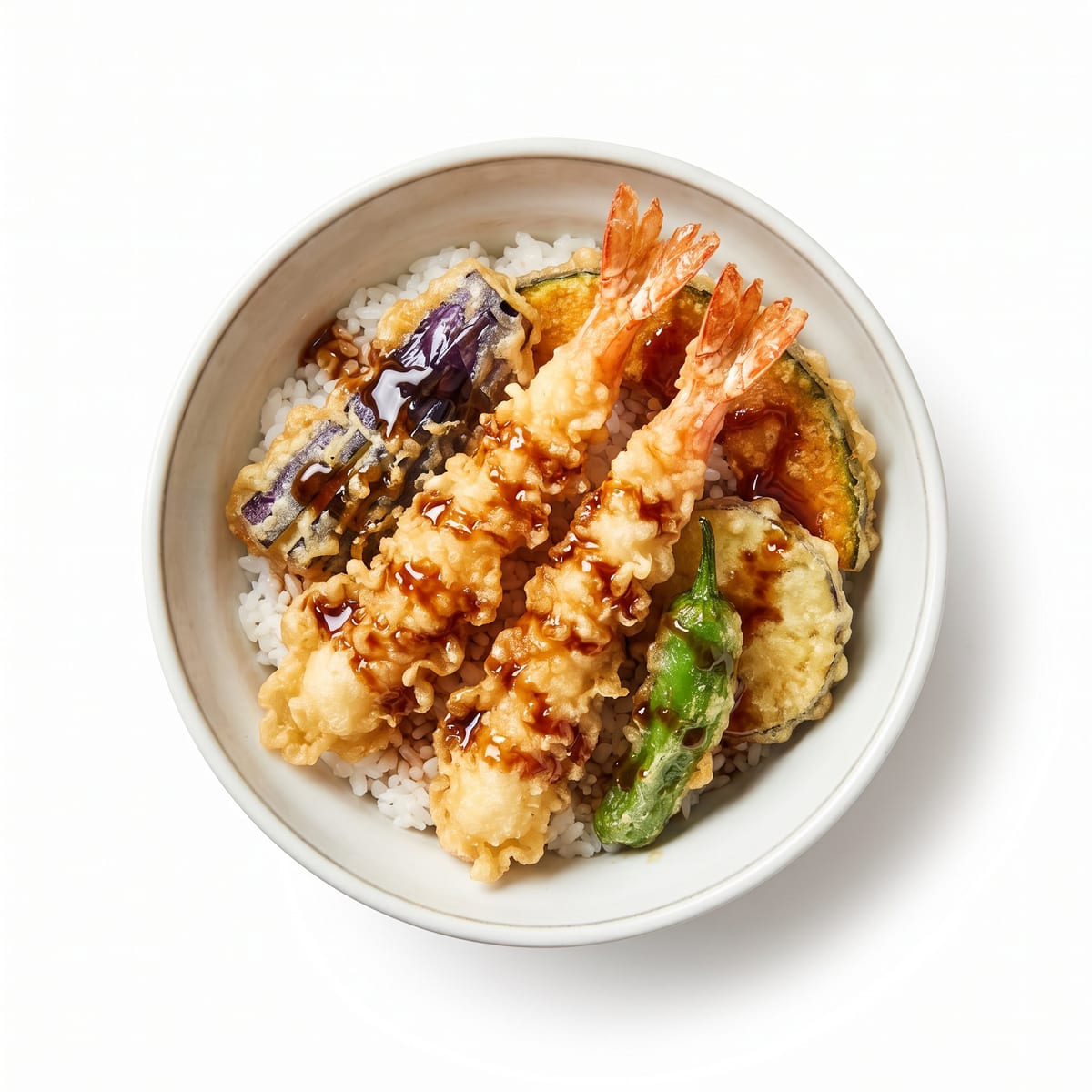
An AI-made illustration of a tendon bowl, not a photo of a real shopAI image

\ Asakusa classic /

Tendon

A bowl of rice with tempura and a sweet, dark sauce. Asakusa is known for it, and many old shops are a short walk from the shrine.

03

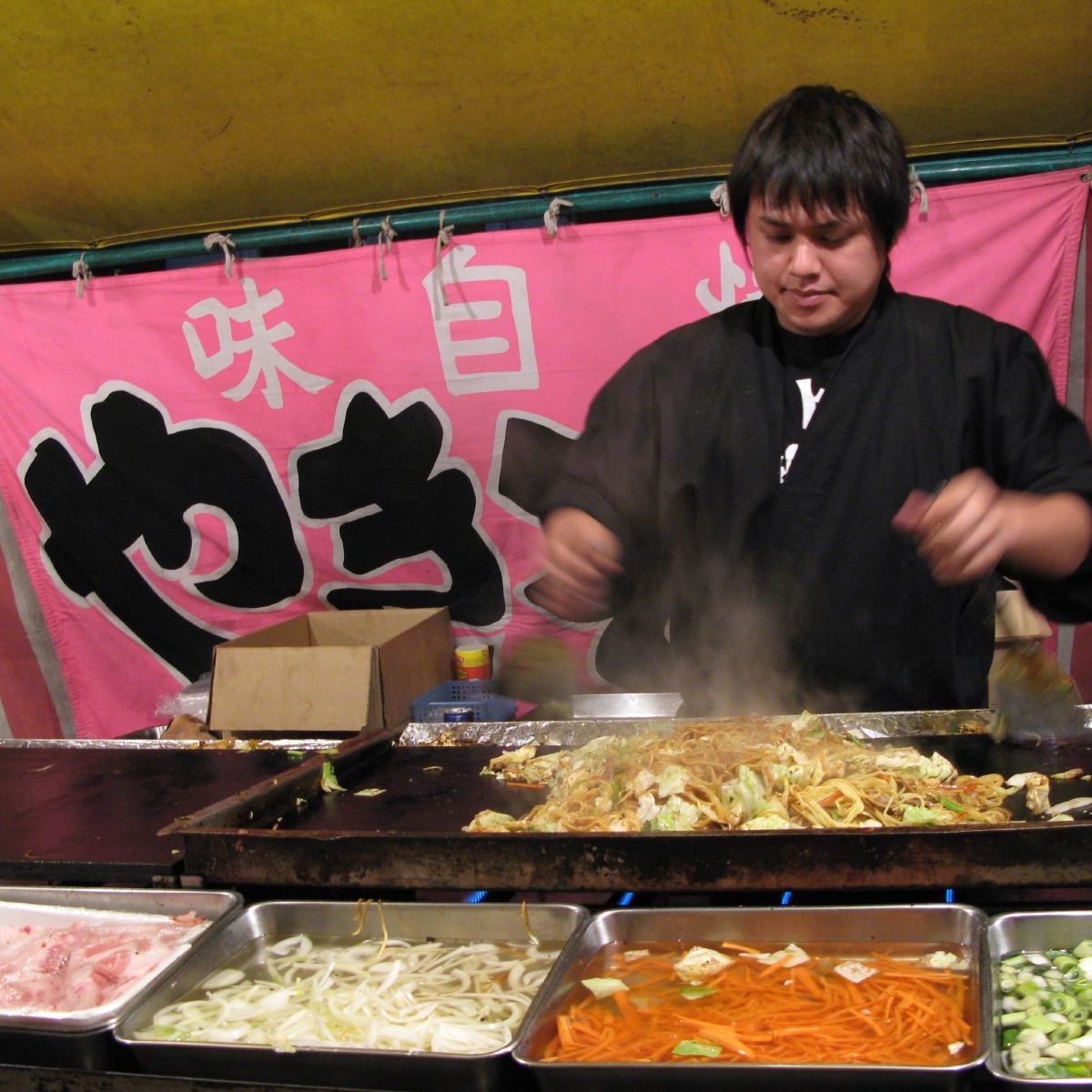
Yakisoba and other stall food

\ Stall food /

Yakisoba and other stall food

The festival stalls sell hot, cheap food. Step out of the flow of people to eat, because the streets are crowded.

Most food photos are from Wikimedia Commons; a few are AI-made illustrations. Hours and prices change, so check each restaurant before you go.

HOW TO ENJOY

01

Pick your day

Saturday for the most mikoshi, Sunday for the three big ones, Friday for the parade and a calmer look.

02

Give way

A mikoshi needs the whole street. When one comes, step to the side and follow the guides and the police.

03

Carry cash

Food stalls are usually cash only.

04

Water and shoes

Mid-May in Tokyo can be hot, and you will be standing for hours. Bring water and comfortable shoes.

ACCESS
Subway
Asakusa Station on the Tokyo Metro Ginza Line and the Toei Asakusa Line, a few minutes on foot from the shrine.
Tsukuba Express
Asakusa Station on the Tsukuba Express, a little further west along Kokusai-dori.
From the airports
The Toei Asakusa Line connects with the Keikyu Line from Haneda and the Keisei Line from Narita, and some trains run straight through. Check your route in a transit app.
Roads
On Sunday, Kaminarimon-dori is closed 10:00–19:00 and Umamichi-dori 10:00–17:00. Do not come by car.
GALLERY

Photos from Wikimedia Commons, taken in past years (see credits). Photos are from the Sanja Matsuri in 2006 and 2023 and may show neighbourhood mikoshi rather than the shrine's three main ones. The binzasara photo shows the instrument, not the Asakusa dance.

FAQ
When is Sanja Matsuri 2027?

Friday, May 14 to Sunday, May 16, 2027, according to the schedule posted by Asakusa Shrine. The shrine notes that it may still change.

What time is the miyadashi?

At 7:00 on Sunday, May 16. The three mikoshi return to the shrine from about 19:00 to 20:00.

Which day is best?

Saturday, May 15, for the most mikoshi (about 100 from 44 neighbourhoods, from 12:00). Sunday for the three main mikoshi. Friday for the parade and the binzasara dance.

Is it free?

Yes. Watching the parade and the mikoshi is free.

What happens if it rains?

The Friday parade and the binzasara dance on the kagura stage are cancelled in rain. For other events, check the shrine site on the day.

Where can I see the mikoshi if I miss the festival?

The three main mikoshi are kept in a storehouse at Asakusa Shrine. Its doors are opened at New Year and on spring weekends and holidays, as well as during the festival.

Sources: Asakusa Shrine: Sanja Matsuri 2027 schedule · Asakusa Shrine: About Sanja Matsuri · Asakusa Shrine: History of the shrine · Asakusa Shrine: Yearly festivals · Senso-ji: History · GO TOKYO: Sanja Matsuri

Stay for the festival.

About 1.8 million people come over the three days, and Asakusa hotels fill up for that weekend. Book early, or stay in Ueno or anywhere on the Ginza Line and ride in.

PR This site contains affiliate links (Klook, KKday, Booking.com and others). We may earn a commission at no extra cost to you.
MORE FESTIVALS